
our approach: co-design, implementation science
what is co-design, implementation science?
We adopted a user-engaged, co-design implementation science model to evaluate youth and provider-identified service gaps and co-design a youth-centred, sexual health service delivery model.
Central to this model is the centering of user lived/living experiences, community engagement, and participatory approaches that include service users (youth) and local sexual health providers as active partners (i.e., co-designers) - in developing, implementing, and refining health interventions. This seeks to ensure that the resulting service is practical, acceptable, and effective. It bridges the "know-do gap" by tailoring evidence-based strategies to specific contexts, enhancing adoption and sustainability
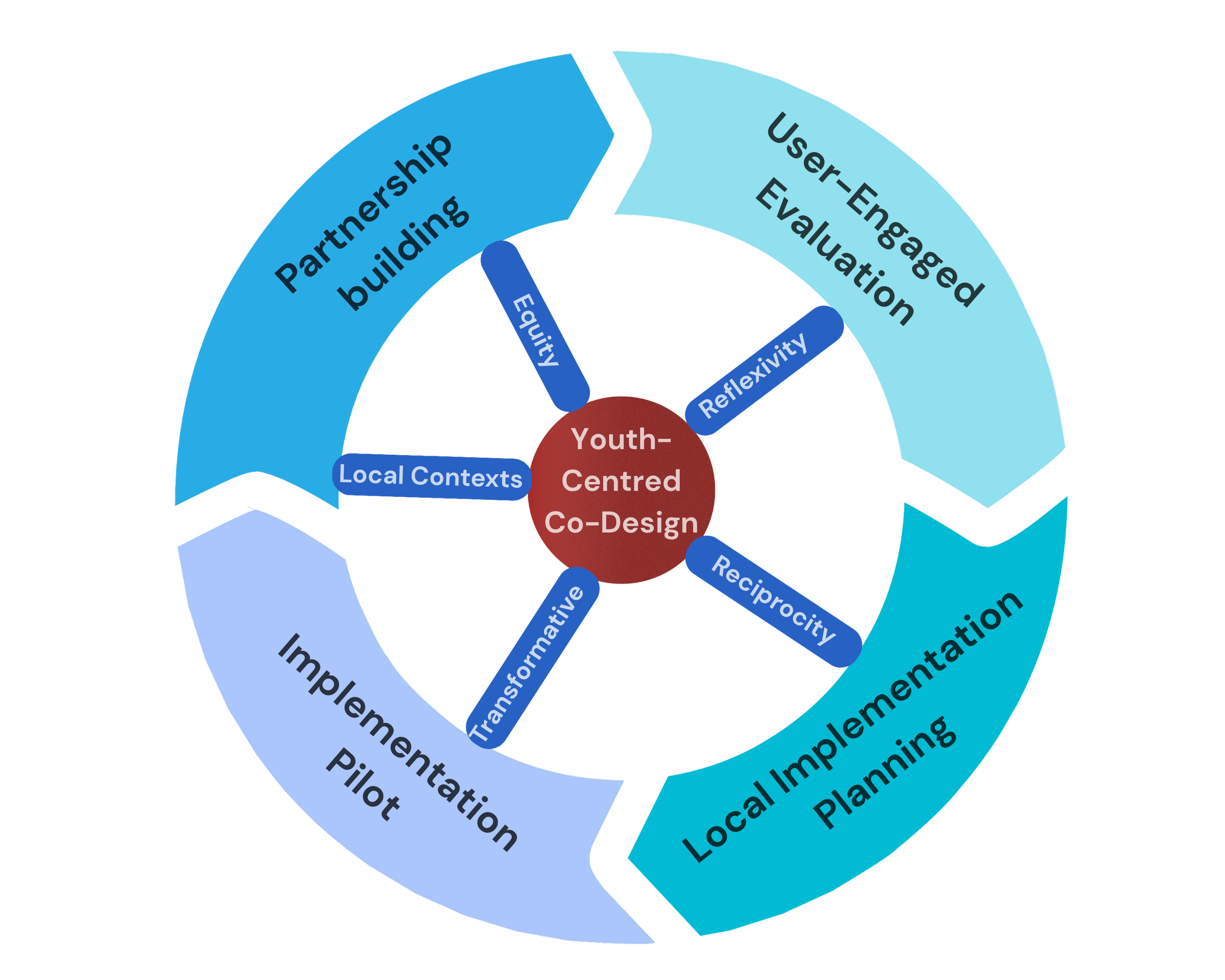
Figure: The Co-Design Implementation Science Process; Adapted from Murnan et al., 2026
community-partnered research & evaluation data co-ownership
Our team is committed to strengthening youth sexual and reproductive health services in B.C., in partnership with youth, service providers, and community partners. Through practices of relational community-partnered research, reciprocity and collaborative knowledge mobilization, the UBC Sexual Health Evaluation Team and Options for Sexual Health are working with youth, local community organizations and partners across B.C. to learn from youth and providers on how to improve youth sexual health services within communities, with particular focus on underserved, and rural and remote communities.
The findings from youth consultations and expert youth and provider interviews were published in an open access report (both here and on the Options for Sexual Health website) to advocate for strengthened, youth-centred sexual healthcare in BC. In addition, local aggregate data available to any of the community partners to use and access to inform local planning.